Why Quality Control is Essential in Engineering & Manufacturing
In today’s competitive manufacturing landscape, delivering products that meet strict quality standards is more important than ever. Whether producing precision-engineered components, heavy industrial equipment, medical devices, or automotive parts, maintaining consistent quality is essential for customer satisfaction, operational efficiency, and business success.
Quality Control (QC) is the process of inspecting, testing, and verifying products during and after manufacturing to ensure they meet predefined specifications and industry standards. Effective quality control minimizes defects, reduces waste, improves product reliability, and helps manufacturers maintain a strong reputation.
In this blog, we’ll explore why quality control is vital in engineering and manufacturing, the methods and tools used, its benefits, and the future trends shaping quality management.
What is Quality Control?
Quality Control is a systematic process of monitoring and evaluating products to ensure they meet required specifications before reaching customers. It involves inspections, measurements, testing, and documentation throughout the manufacturing process.
The primary objectives of quality control are:
- Maintain consistent product quality
- Detect defects early
- Ensure compliance with standards
- Reduce production errors
- Improve customer satisfaction
- Enhance operational efficiency
Quality control is applied at every stage of production—from raw material inspection to final product testing.
Quality Control vs Quality Assurance
Although often used interchangeably, Quality Control (QC) and Quality Assurance (QA) have different roles.
| Quality Control (QC) | Quality Assurance (QA) |
|---|---|
| Focuses on inspecting finished products | Focuses on improving manufacturing processes |
| Detects defects | Prevents defects |
| Product-oriented | Process-oriented |
| Uses testing and inspection | Uses planning, procedures, and audits |
| Ensures products meet specifications | Ensures systems consistently produce quality products |
Together, QC and QA create a comprehensive quality management system.
Why Quality Control is Essential
1. Ensures Consistent Product Quality
Quality control ensures every product meets the same standards, regardless of production volume.
Benefits include:
- Uniform dimensions
- Reliable performance
- Consistent appearance
- Better customer confidence
2. Reduces Manufacturing Defects
By identifying problems early, manufacturers can correct issues before products reach customers.
This helps reduce:
- Rework
- Scrap
- Product recalls
- Warranty claims
Early detection saves both time and money.
3. Improves Customer Satisfaction
Customers expect reliable, high-quality products. Delivering consistent quality builds trust, encourages repeat business, and strengthens brand reputation.
Satisfied customers are also more likely to recommend your products and services.
4. Increases Operational Efficiency
Effective quality control streamlines production by identifying process improvements and minimizing disruptions.
Advantages include:
- Reduced downtime
- Improved workflow
- Better resource utilization
- Higher productivity
5. Supports Regulatory Compliance
Many industries must comply with strict regulations and standards.
Quality control helps manufacturers meet requirements for:
- ISO 9001
- ASME Standards
- ASTM Standards
- Industry-specific regulations
- Customer specifications
Compliance reduces legal risks and improves market credibility.
6. Minimizes Production Costs
Although quality control requires investment, it significantly reduces long-term costs by preventing expensive mistakes.
Cost savings come from:
- Less material waste
- Fewer rejected parts
- Reduced repairs
- Lower warranty expenses
- Improved production efficiency
7. Enhances Product Safety
Safety-critical industries depend on rigorous quality control to ensure products perform reliably under demanding conditions.
Examples include:
- Aerospace components
- Medical devices
- Automotive braking systems
- Pressure vessels
- Structural steel components
Proper inspection helps prevent failures that could lead to accidents or costly downtime.
8. Improves Business Reputation
A strong commitment to quality strengthens customer relationships and enhances a company’s reputation in competitive markets.
Businesses known for delivering reliable products are more likely to secure long-term contracts and repeat orders.
Common Quality Control Methods
Manufacturers use various inspection techniques depending on the product and industry.
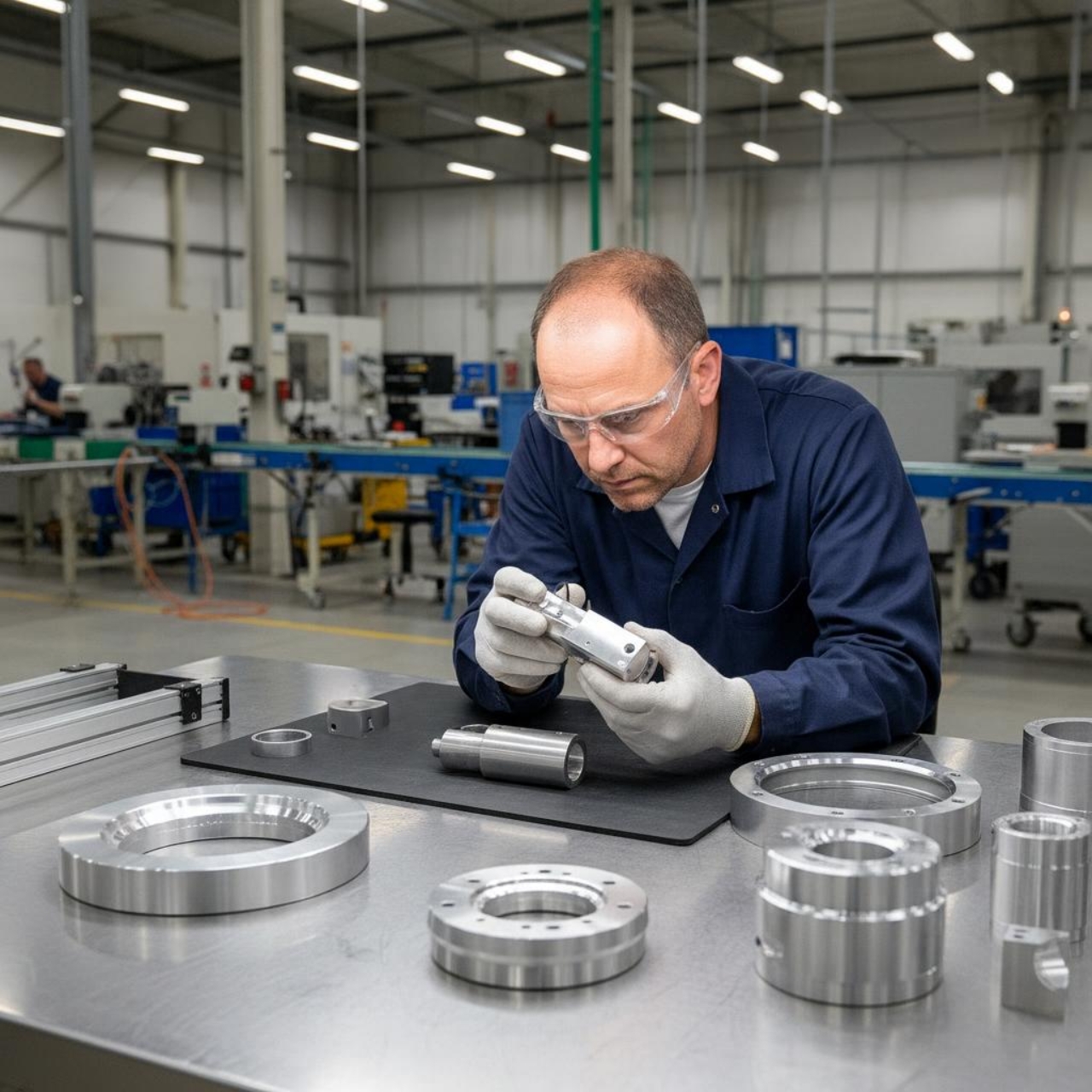
Visual Inspection
Operators examine products for surface defects, damage, or assembly issues.
Dimensional Inspection
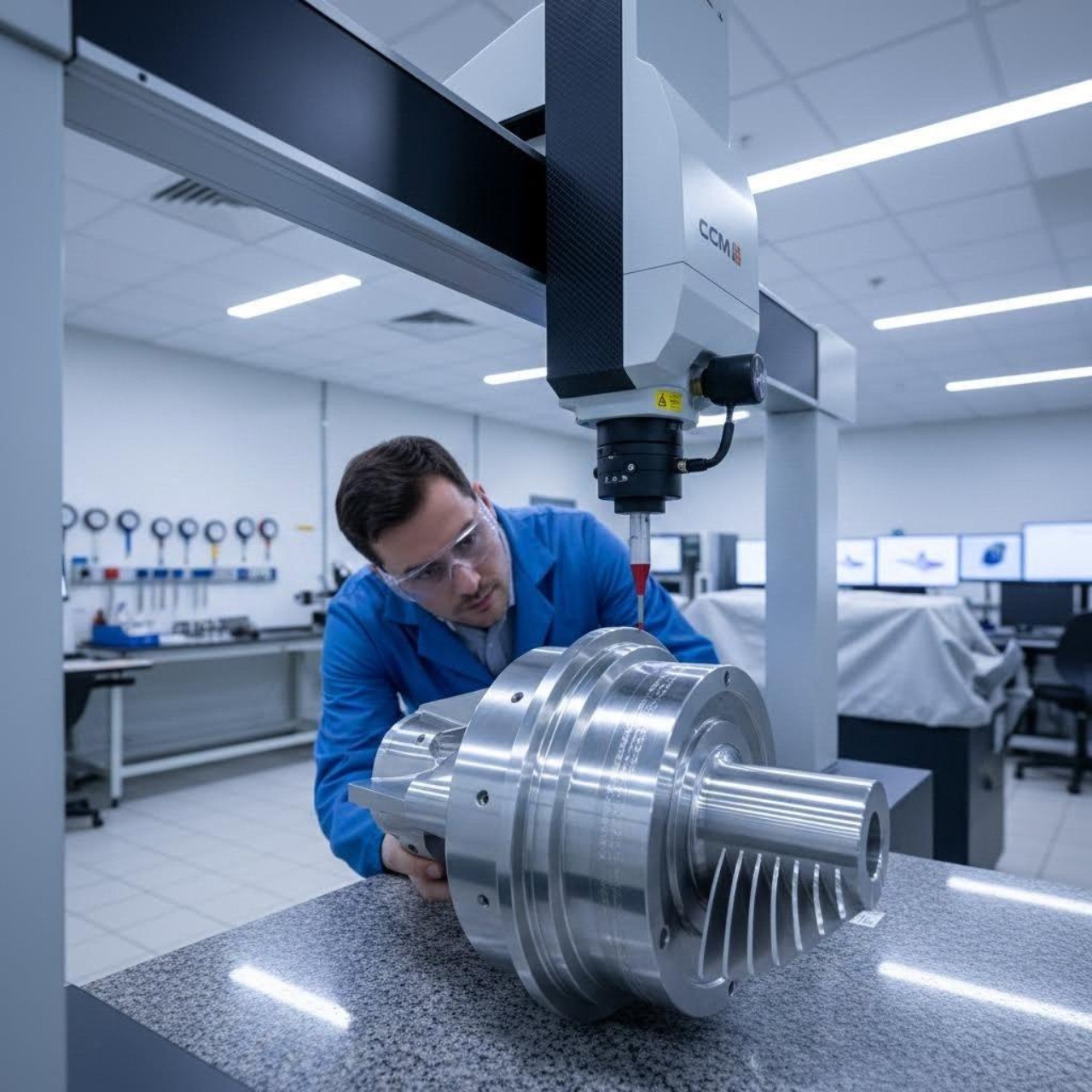
Tools such as calipers, micrometers, and Coordinate Measuring Machines (CMMs) verify that parts meet design specifications.
Non-Destructive Testing (NDT)
NDT methods inspect materials without damaging them.
Common techniques include:
- Ultrasonic Testing (UT)
- Magnetic Particle Testing (MT)
- Dye Penetrant Testing (PT)
- Radiographic Testing (RT)
Functional Testing
Finished products are tested under operating conditions to ensure they perform as intended.
Statistical Process Control (SPC)
SPC uses production data to monitor process performance and detect variations before defects occur.
Essential Quality Control Tools
Modern quality control combines traditional measuring instruments with advanced digital technologies.
Common tools include:
- Coordinate Measuring Machines (CMM)
- Digital Calipers
- Micrometers
- Height Gauges
- Surface Roughness Testers
- Laser Measurement Systems
- Machine Vision Inspection Systems
- 3D Scanners
These tools improve measurement accuracy and inspection efficiency.
Industries That Depend on Quality Control
Aerospace
- Aircraft structures
- Turbine components
- Engine parts
Automotive
- Engine components
- Transmission systems
- Brake assemblies
Medical
- Surgical instruments
- Orthopedic implants
- Diagnostic equipment
Electronics
- Printed circuit boards
- Connectors
- Semiconductor components
Construction & Heavy Engineering
- Structural steel
- Pressure vessels
- Industrial machinery
- Fabricated components
The Role of Technology in Modern Quality Control
Technology has transformed quality management by making inspections faster, more accurate, and data-driven.
Artificial Intelligence (AI)
AI can identify defects, analyze production trends, and improve inspection accuracy.
Machine Vision
High-resolution cameras automatically inspect products for defects and dimensional accuracy.
Industrial Internet of Things (IIoT)
Connected sensors provide real-time production monitoring and equipment performance data.
Automation
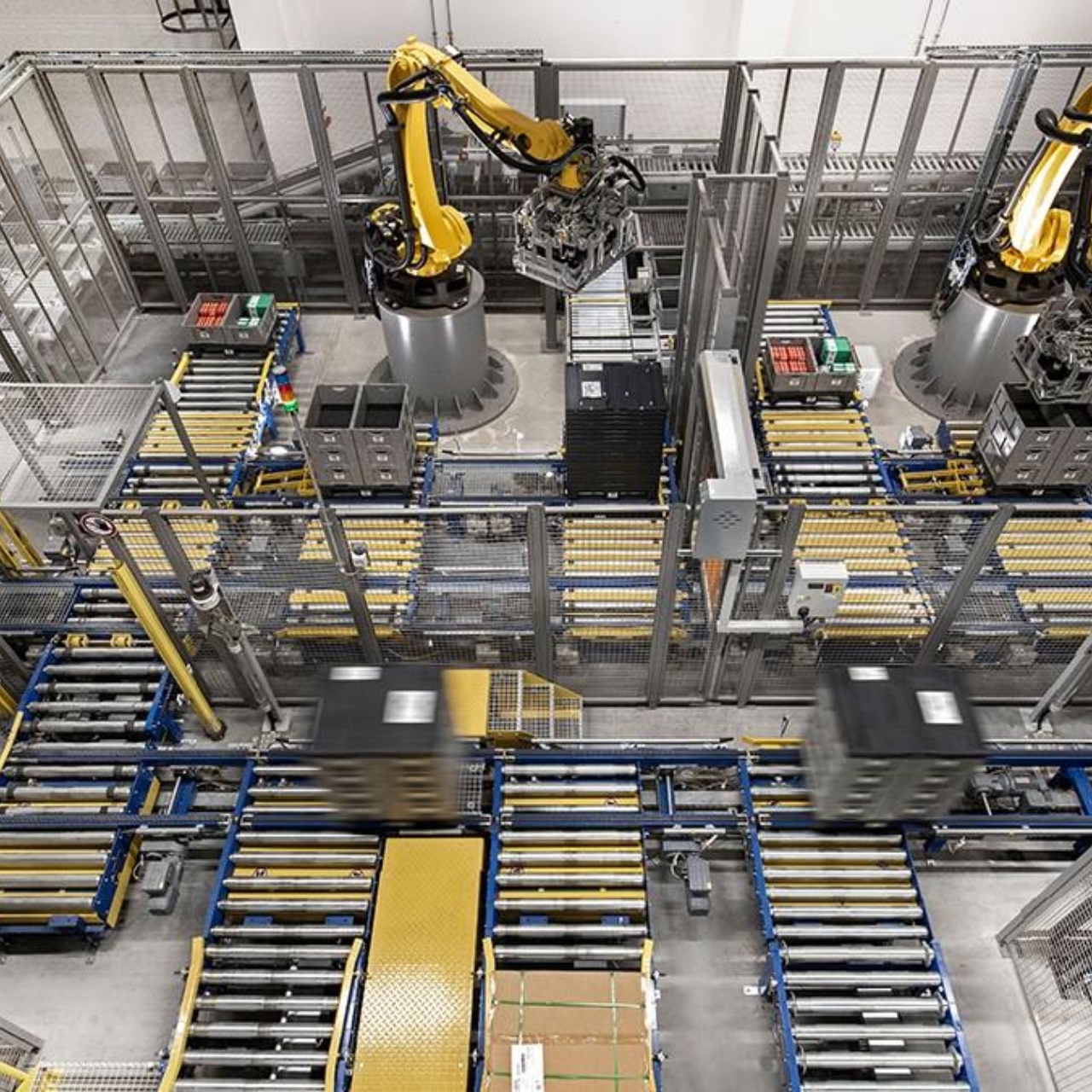
Automated inspection systems increase speed, reduce manual errors, and improve consistency.
Digital Documentation
Cloud-based quality systems simplify traceability, reporting, and compliance management.
Future Trends in Quality Control
Quality control is evolving with smart manufacturing technologies.
Predictive Quality
AI and analytics will predict quality issues before defects occur.
Smart Factories
Integrated systems will monitor production and inspection processes in real time.
Robotics
Robotic inspection systems will improve speed, consistency, and workplace safety.
Digital Twins
Virtual production models will simulate manufacturing processes and identify quality risks before physical production begins.
Sustainable Manufacturing
Manufacturers are focusing on reducing waste, conserving resources, and improving energy efficiency while maintaining high-quality standards.
Frequently Asked Questions (FAQs)
What is quality control in engineering?
Quality control is the process of inspecting, measuring, and testing products to ensure they meet design specifications, industry standards, and customer expectations.
Why is quality control important in manufacturing?
Quality control helps reduce defects, improve product consistency, lower production costs, enhance safety, and increase customer satisfaction.
What is the difference between quality control and quality assurance?
Quality control focuses on identifying defects in products, while quality assurance focuses on improving processes to prevent defects from occurring.
Which industries require strict quality control?
Industries such as aerospace, automotive, medical, electronics, construction, heavy engineering, and industrial manufacturing rely heavily on quality control.
What tools are commonly used in quality control?
Common tools include Coordinate Measuring Machines (CMMs), calipers, micrometers, laser scanners, machine vision systems, and non-destructive testing equipment.
Conclusion
Quality control is a critical component of successful engineering and manufacturing operations. It ensures products meet required specifications, improves customer satisfaction, reduces waste, and supports compliance with industry standards. By combining skilled personnel, advanced inspection technologies, and continuous process improvement, manufacturers can consistently deliver safe, reliable, and high-quality products.
As automation, AI, and smart manufacturing continue to advance, quality control will become even more proactive and data-driven, helping businesses achieve higher efficiency, lower costs, and stronger long-term competitiveness.