Common Challenges in Manufacturing and How Engineering Solutions Solve Them
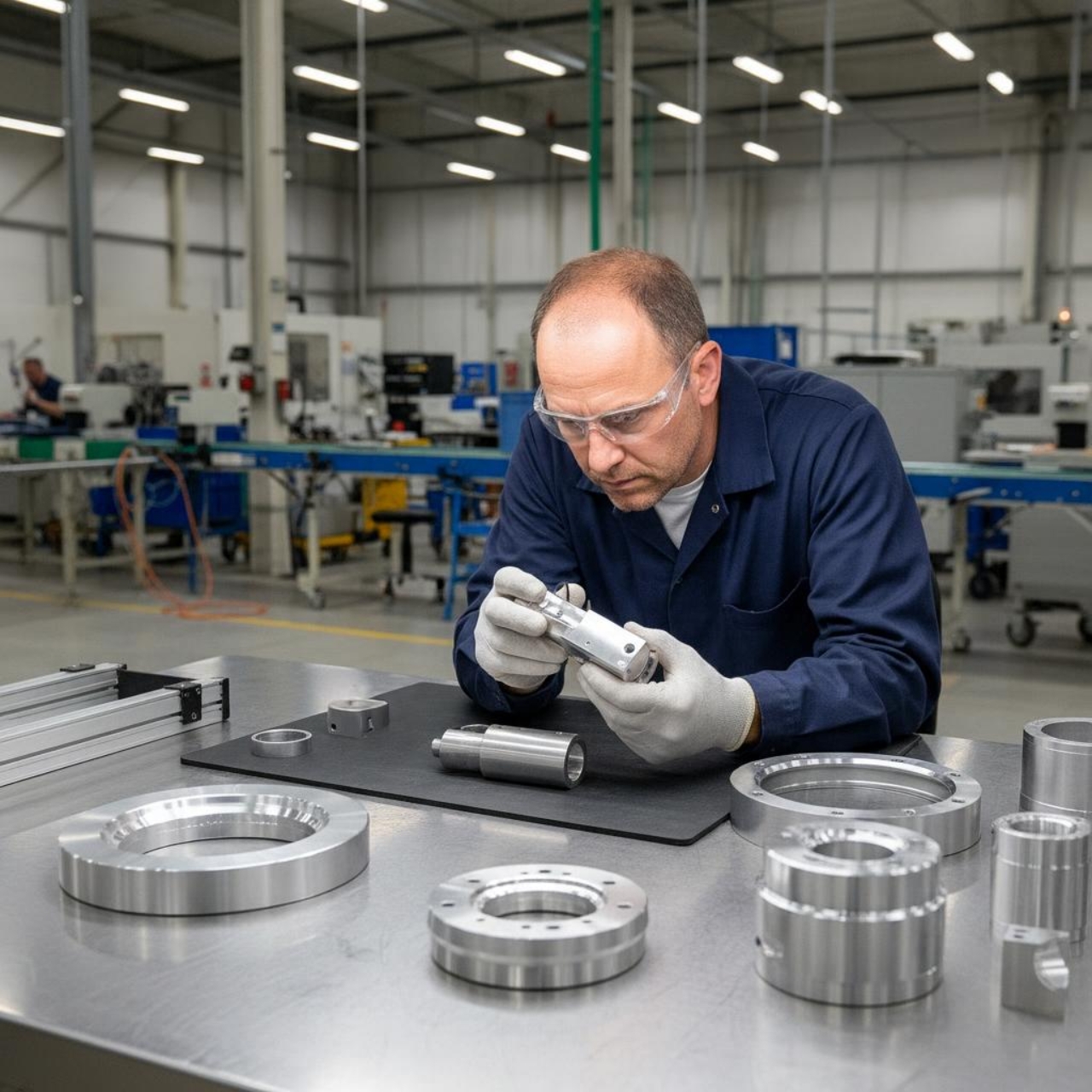
Common Challenges in Manufacturing and How Engineering Solutions Solve Them
Manufacturing is the driving force behind industries such as automotive, aerospace, construction, healthcare, energy, and electronics. However, today’s manufacturers face increasing pressure to produce high-quality products faster, more efficiently, and at competitive costs. Rising raw material prices, labor shortages, equipment downtime, supply chain disruptions, and stricter quality standards have made manufacturing more challenging than ever.
The good news is that modern engineering solutions—including precision engineering, industrial automation, CNC machining, robotics, AI, and data-driven quality control—are helping businesses overcome these challenges while improving productivity and profitability.
In this guide, we’ll discuss the most common manufacturing challenges and explain how innovative engineering solutions help businesses stay competitive in a rapidly evolving industrial landscape.
Why Manufacturing Faces Increasing Challenges
Modern manufacturing environments are more complex than ever before. Global competition, changing customer demands, and technological advancements require companies to continuously improve their operations.
Some of the biggest challenges include:
- Rising production costs
- Skilled labor shortages
- Quality control issues
- Equipment downtime
- Supply chain disruptions
- Material waste
- Tight delivery schedules
- Increasing regulatory requirements
Addressing these issues requires strategic investment in engineering expertise and advanced manufacturing technologies.
1. Rising Production Costs
The Challenge
Manufacturers are experiencing higher expenses due to increasing labor costs, energy prices, and raw material costs.
Engineering Solution
Modern engineering helps reduce production costs through:
- Industrial automation
- Lean manufacturing practices
- CNC machining
- Process optimization
- Energy-efficient equipment
These improvements reduce waste, improve productivity, and lower operating expenses without sacrificing quality.
2. Skilled Labor Shortages
The Challenge
Many manufacturers struggle to find experienced machine operators, welders, technicians, and engineers.
Engineering Solution
Automation technologies reduce dependence on manual labor by introducing:
- Robotic welding
- Automated assembly systems
- CNC machinery
- PLC-controlled production lines
- Smart manufacturing systems
Employees can then focus on supervision, maintenance, and higher-value tasks.
3. Product Quality and Consistency
The Challenge
Inconsistent manufacturing can lead to defects, customer complaints, warranty claims, and costly rework.
Engineering Solution
Quality is improved through:
- Precision engineering
- CNC machining
- Coordinate Measuring Machines (CMM)
- Automated inspection systems
- Statistical Process Control (SPC)
Consistent quality builds customer confidence and reduces manufacturing waste.
4. Equipment Downtime
The Challenge
Unexpected machine failures interrupt production, delay deliveries, and increase operating costs.
Engineering Solution
Predictive maintenance technologies use sensors and analytics to monitor machine health in real time.
Benefits include:
- Early fault detection
- Reduced unplanned downtime
- Longer equipment life
- Lower maintenance costs
- Higher production availability
5. Supply Chain Disruptions
The Challenge
Global supply chain issues can delay material deliveries and impact production schedules.
Engineering Solution
Manufacturers improve resilience by:
- Diversifying suppliers
- Optimizing inventory management
- Digitizing supply chain operations
- Using production planning software
- Improving demand forecasting
These strategies reduce disruptions and improve delivery reliability.
6. Material Waste
The Challenge
Excessive scrap and inefficient material usage increase production costs and negatively impact sustainability.
Engineering Solution
Engineering teams reduce waste through:
- Precision CNC machining
- Optimized nesting for sheet metal cutting
- Automated material handling
- Lean manufacturing techniques
- Real-time production monitoring
Efficient material utilization lowers costs and supports environmental goals.
7. Meeting Tight Production Deadlines
The Challenge
Customers expect shorter lead times without compromising quality.
Engineering Solution
Manufacturers improve delivery performance through:
- Automated production lines
- Advanced scheduling systems
- Robotics
- Flexible manufacturing cells
- Improved workflow planning
Automation increases production capacity while maintaining consistent quality.
8. Compliance with Industry Standards
The Challenge
Manufacturers must comply with strict industry regulations and customer specifications.
Engineering Solution
Engineering companies implement:
- ISO 9001 Quality Management Systems
- Documented inspection procedures
- Material traceability
- Process validation
- Digital quality records
Compliance reduces risks and enhances customer trust.
9. Adopting New Technologies
The Challenge
Rapid technological advancements make it difficult for manufacturers to stay up to date.
Engineering Solution
Companies are investing in:
- Industrial Internet of Things (IIoT)
- Artificial Intelligence (AI)
- Robotics
- Smart factories
- Cloud-based manufacturing systems
These technologies improve efficiency, decision-making, and long-term competitiveness.
10. Sustainability and Environmental Responsibility
The Challenge
Manufacturers are under increasing pressure to reduce emissions, energy consumption, and waste.
Engineering Solution
Sustainable engineering practices include:
- Energy-efficient machinery
- Recycling production materials
- Optimized manufacturing processes
- Renewable energy integration
- Environmentally friendly production methods
These initiatives lower costs while supporting corporate sustainability goals.
Key Engineering Technologies Solving Manufacturing Challenges
Modern engineering relies on several advanced technologies to address industrial problems.
CNC Machining
Produces highly accurate and repeatable components with minimal material waste.
Industrial Automation
Automates repetitive tasks, improving productivity and reducing labor costs.
Robotics
Enhances speed, precision, and workplace safety in manufacturing operations.
Artificial Intelligence (AI)
Supports predictive maintenance, quality inspection, and production optimization.
Industrial Internet of Things (IIoT)
Provides real-time monitoring of machines, production lines, and equipment performance.
CAD/CAM Software
Improves product design accuracy and streamlines manufacturing processes.
Industries Benefiting from Engineering Solutions
Engineering-driven manufacturing improvements support a wide range of industries.
Automotive
- Engine components
- Chassis systems
- Automated assembly
Aerospace
- Aircraft structures
- Turbine components
- Precision machining
Medical
- Surgical instruments
- Medical implants
- Precision manufacturing
Electronics
- Circuit board assembly
- Semiconductor production
- Precision enclosures
Heavy Engineering
- Steel fabrication
- Industrial machinery
- Power generation equipment
Future Trends in Manufacturing Engineering
The future of manufacturing will be driven by digital transformation and intelligent automation.
Smart Factories
Connected production systems will optimize manufacturing in real time.
Digital Twins
Virtual production models will improve planning, simulation, and maintenance.
AI-Powered Quality Inspection
Artificial intelligence will identify defects faster and more accurately than manual inspection.
Collaborative Robots (Cobots)
Cobots will work safely alongside employees to increase productivity.
Industry 4.0
Integrated automation, IIoT, cloud computing, and advanced analytics will continue transforming manufacturing worldwide.
Frequently Asked Questions (FAQs)
What are the biggest challenges in manufacturing today?
Manufacturers commonly face rising production costs, labor shortages, quality control issues, equipment downtime, supply chain disruptions, material waste, and increasing regulatory requirements.
How do engineering solutions improve manufacturing?
Engineering solutions use technologies such as automation, CNC machining, robotics, AI, and quality management systems to improve productivity, reduce costs, enhance quality, and increase operational efficiency.
Why is industrial automation important?
Industrial automation reduces manual labor, increases production speed, improves consistency, enhances workplace safety, and lowers long-term operating costs.
How does predictive maintenance reduce downtime?
Predictive maintenance uses sensors and data analytics to monitor equipment health, detect issues early, and schedule maintenance before failures occur.
Which industries benefit most from modern engineering solutions?
Industries including automotive, aerospace, medical, electronics, construction, heavy engineering, energy, and manufacturing all benefit from advanced engineering technologies and smart production systems.
Conclusion
Manufacturing challenges are inevitable, but they don’t have to limit business growth. By adopting modern engineering solutions such as precision engineering, industrial automation, CNC machining, predictive maintenance, and intelligent quality control, manufacturers can reduce costs, improve efficiency, maintain high product quality, and strengthen their competitive position.
As Industry 4.0, AI, robotics, and smart factories continue to reshape the industrial landscape, businesses that embrace innovation will be better equipped to overcome future challenges and achieve sustainable, long-term success.