
How CNC Machining Improves Accuracy and Production Efficiency
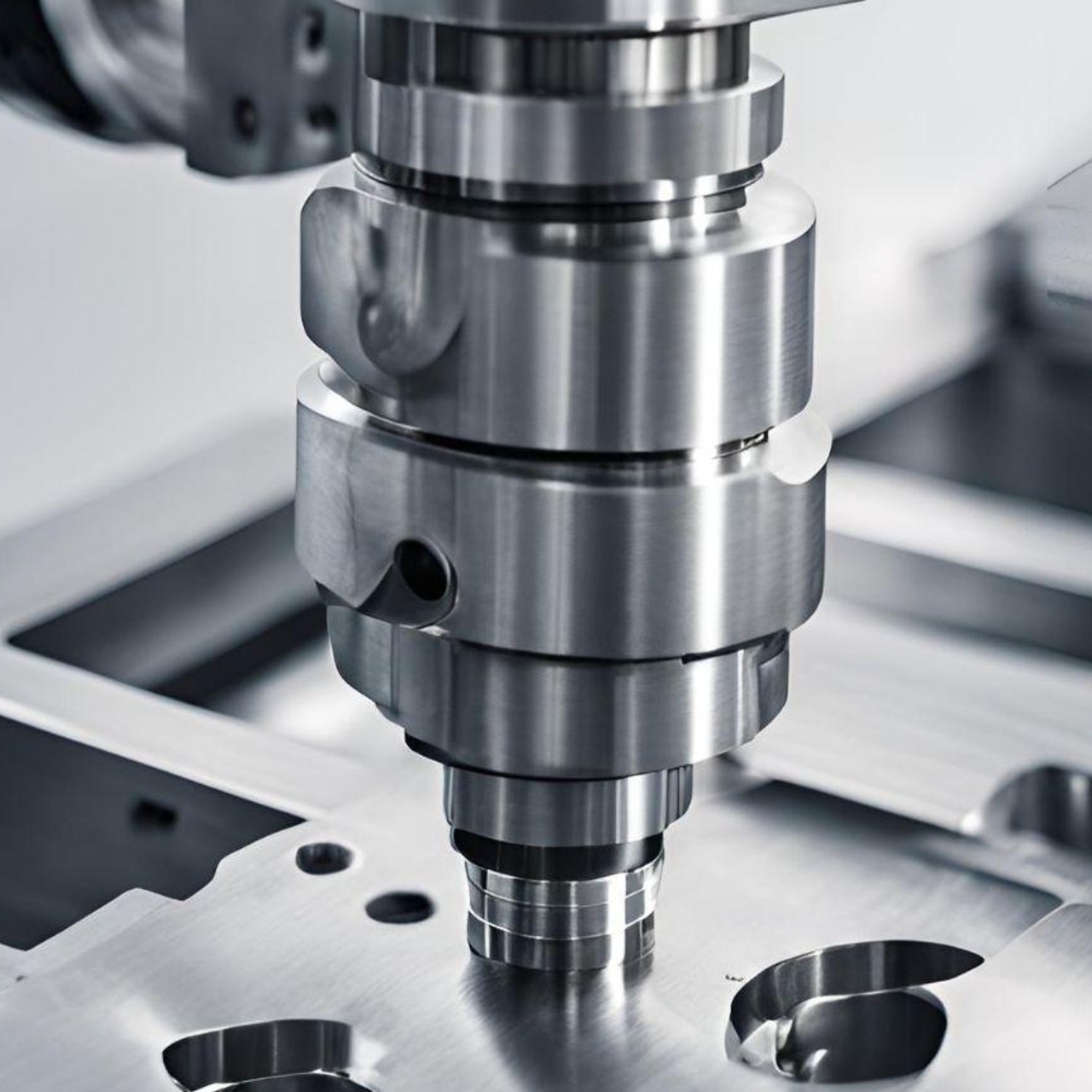
How CNC Machining Improves Accuracy and Production Efficiency
In today’s fast-paced manufacturing industry, precision, speed, and consistency are essential for staying competitive. Businesses across sectors such as aerospace, automotive, medical, electronics, and industrial engineering rely on Computer Numerical Control (CNC) machining to produce high-quality components with exceptional accuracy.
Unlike traditional machining methods, CNC machining uses computer-controlled equipment to automate cutting, drilling, milling, turning, and shaping operations. This technology minimizes human error, increases production speed, and ensures repeatable results across small and large production runs.
In this article, we’ll explore how CNC machining improves manufacturing accuracy and production efficiency, the technologies behind it, its industrial applications, and why it has become a cornerstone of modern precision engineering.
What is CNC Machining?
CNC (Computer Numerical Control) machining is an advanced manufacturing process where computer software controls machine tools to produce components with high precision. Engineers create digital designs using CAD (Computer-Aided Design) software, which are converted into CAM (Computer-Aided Manufacturing) programs that guide CNC machines through every machining operation.
Common CNC processes include:
- CNC Milling
- CNC Turning
- CNC Drilling
- CNC Grinding
- CNC Boring
- CNC Tapping
Because the entire process is digitally controlled, manufacturers can achieve tight tolerances and consistent quality with minimal manual intervention.
Why Accuracy Matters in Manufacturing
Even the smallest dimensional variation can affect the performance, safety, and lifespan of a product. Industries such as aerospace, medical, and automotive require components that fit together perfectly and perform reliably under demanding conditions.
Accurate machining helps:
- Ensure proper component fit
- Improve product performance
- Reduce assembly issues
- Minimize rework and scrap
- Meet strict industry standards
CNC machining delivers the precision needed for these critical applications.
How CNC Machining Improves Accuracy
1. Computer-Controlled Precision
CNC machines follow programmed instructions with exceptional consistency. Every movement is controlled digitally, reducing the risk of human error.
Benefits
- Consistent dimensions
- High repeatability
- Tight tolerances
- Reliable production quality
2. Tight Manufacturing Tolerances
Modern CNC machines can produce parts with extremely fine tolerances, making them suitable for industries where precision is essential.
Applications include:
- Aerospace components
- Medical implants
- Precision gears
- Automotive engine parts
- Electronic housings
3. Reduced Human Error
Traditional machining depends heavily on manual operation, increasing the chance of inconsistencies. CNC systems automate tool paths, speeds, and feeds, ensuring every part is produced according to the same specifications.
4. Multi-Axis Machining
Advanced 4-axis and 5-axis CNC machines can machine complex geometries from multiple angles without repeatedly repositioning the workpiece.
Advantages include:
- Improved dimensional accuracy
- Fewer setups
- Better surface finishes
- Reduced production time
5. Advanced Inspection and Quality Control
Manufacturers often combine CNC machining with precision inspection equipment such as Coordinate Measuring Machines (CMM), laser scanners, and digital measuring tools.
These systems verify:
- Dimensions
- Surface finish
- Geometric accuracy
- Compliance with design specifications
This ensures every finished component meets strict quality requirements.
How CNC Machining Improves Production Efficiency
1. Faster Production Cycles
Automated CNC machines operate continuously with minimal supervision, significantly increasing production output.
Benefits include:
- Shorter machining times
- Faster product delivery
- Improved workflow
- Higher production capacity
2. Automation Reduces Downtime
Modern CNC systems can automatically:
- Change tools
- Adjust machining parameters
- Monitor operations
- Detect potential issues
Automation minimizes delays and keeps production running smoothly.
3. Consistent Repeatability
Once a CNC program is created, it can be reused to manufacture identical parts repeatedly with the same accuracy.
This is especially valuable for:
- Mass production
- Replacement components
- Standardized manufacturing
- High-volume industrial production
4. Lower Material Waste
Accurate tool paths optimize material usage, reducing unnecessary cutting and scrap.
Advantages include:
- Lower raw material costs
- Reduced environmental impact
- Better production efficiency
- Improved profitability
5. Shorter Lead Times
Digital programming and automated machining reduce setup time and accelerate production schedules.
Manufacturers can respond more quickly to customer demands while maintaining quality standards.
Additional Benefits of CNC Machining
Beyond accuracy and efficiency, CNC machining offers several other advantages.
Superior Surface Finish
Precision cutting produces smooth surfaces, reducing the need for secondary finishing operations.
Complex Part Manufacturing
CNC machines can manufacture intricate designs that would be difficult or impossible using conventional machining methods.
Flexible Material Compatibility
CNC machining works with a wide range of materials, including:
- Aluminum
- Stainless Steel
- Carbon Steel
- Brass
- Copper
- Titanium
- Engineering Plastics
Improved Workplace Safety
Automation minimizes direct operator interaction with cutting tools, reducing workplace risks and improving overall safety.
Industries That Rely on CNC Machining
Aerospace
- Turbine blades
- Engine components
- Aircraft brackets
- Structural parts
Automotive
- Engine blocks
- Transmission components
- Brake systems
- Precision gears
Medical
- Surgical instruments
- Orthopedic implants
- Dental components
- Diagnostic equipment
Electronics
- Heat sinks
- Precision enclosures
- Connectors
- Semiconductor components
Industrial Manufacturing
- Pumps
- Valves
- Shafts
- Bearings
- Machine parts
Technologies Supporting Modern CNC Machining
The latest CNC systems integrate with advanced manufacturing technologies to improve productivity and quality.
CAD/CAM Software
Enables accurate digital design and automated toolpath generation.
Industrial Automation
Automates production workflows and machine operations.
Artificial Intelligence (AI)
Optimizes machining parameters, predicts tool wear, and improves process efficiency.
Industrial Internet of Things (IIoT)
Connected machines provide real-time monitoring, remote diagnostics, and production analytics.
Robotics
Robotic systems automate material handling, loading, unloading, and inspection.
Future Trends in CNC Machining
The future of CNC machining is driven by smart manufacturing and digital transformation.
AI-Driven Process Optimization
Artificial intelligence will automatically optimize machining conditions for improved quality and productivity.
Predictive Maintenance
Sensors will detect machine wear before failures occur, reducing downtime and maintenance costs.
Smart Factories
CNC machines will integrate seamlessly with interconnected production systems, enabling real-time communication and data-driven decision-making.
Hybrid Manufacturing
Manufacturers will combine CNC machining with additive manufacturing (3D printing) to create complex components more efficiently.
Sustainable Manufacturing
Modern CNC equipment is being designed to reduce energy consumption, improve material utilization, and support environmentally responsible production.
Frequently Asked Questions (FAQs)
What is CNC machining?
CNC machining is a computer-controlled manufacturing process that automates cutting, drilling, milling, turning, and other machining operations to produce highly accurate components.
How does CNC machining improve accuracy?
By using programmed toolpaths, precise machine movements, and advanced control systems, CNC machining minimizes human error and consistently produces parts with tight tolerances.
Why is CNC machining more efficient than conventional machining?
CNC machines operate automatically, reduce setup time, enable continuous production, minimize material waste, and deliver consistent quality, leading to higher productivity.
Which industries use CNC machining?
Industries such as aerospace, automotive, medical, electronics, industrial manufacturing, defense, and energy rely on CNC machining for precision components.
Can CNC machining handle different materials?
Yes. CNC machines can process metals such as aluminum, stainless steel, titanium, brass, and copper, as well as engineering plastics and composite materials.
Conclusion
CNC machining has transformed modern manufacturing by delivering exceptional accuracy, repeatability, and production efficiency. Through computer-controlled operations, advanced automation, and precision inspection, manufacturers can produce high-quality components faster while reducing waste and operational costs.
As technologies such as AI, IIoT, robotics, and smart factories continue to evolve, CNC machining will remain at the forefront of precision engineering, helping industries achieve greater productivity, improved quality, and long-term competitiveness.