
Casting vs Forging: Key Differences, Advantages & Industrial Applications
Casting vs Forging: Key Differences, Advantages & Industrial Applications
Choosing the right manufacturing process is essential for producing durable, cost-effective, and high-performance metal components. Two of the most common manufacturing methods used across industries are casting and forging. While both processes shape metal into finished products, they differ significantly in terms of manufacturing techniques, material properties, strength, cost, and applications.
Whether you’re designing automotive parts, industrial machinery, construction equipment, or aerospace components, understanding the differences between casting and forging can help you make the right decision for your project.
This guide explores how casting and forging work, their benefits, limitations, industrial applications, and how to determine which process best suits your manufacturing needs.
What is Casting?
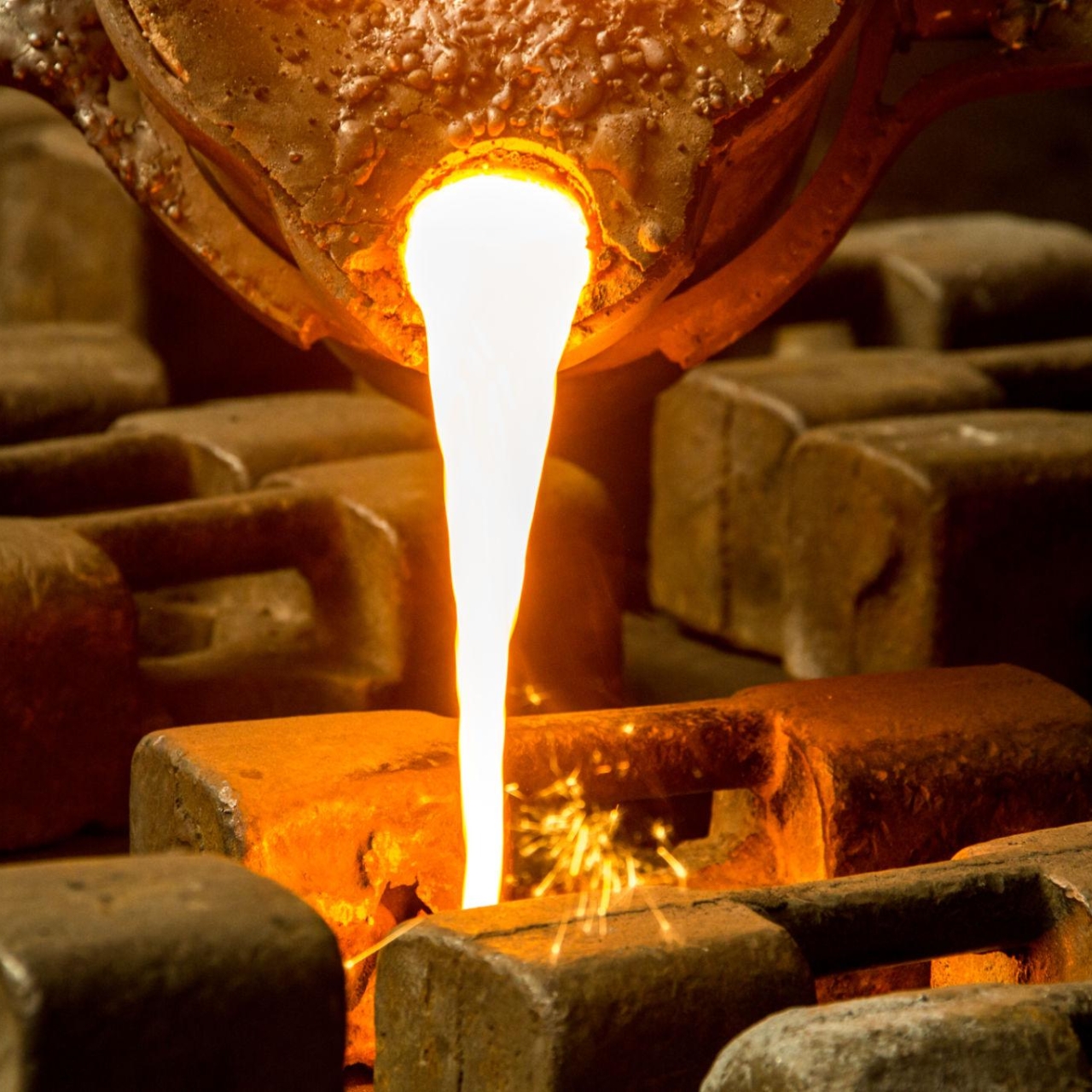
Casting is a manufacturing process in which molten metal is poured into a mold cavity and allowed to cool and solidify into the desired shape. Once solidified, the casting is removed from the mold and may undergo machining or finishing to achieve final dimensions and surface quality.
Casting is particularly useful for creating complex shapes that would be difficult or expensive to produce using other manufacturing methods.
Common Casting Processes
- Sand Casting
- Investment Casting
- Die Casting
- Permanent Mold Casting
- Centrifugal Casting
- Lost Foam Casting
What is Forging?
Forging is a manufacturing process where metal is shaped by applying compressive force using hammers, presses, or dies. The process is typically performed at high temperatures (hot forging) but can also be carried out at room temperature (cold forging) depending on the material and application.
Unlike casting, forging improves the internal grain structure of the metal, resulting in stronger and more durable components.
Common Forging Methods
- Open Die Forging
- Closed Die Forging
- Drop Forging
- Press Forging
- Cold Forging
- Hot Forging
Casting vs Forging: Key Differences
| Feature | Casting | Forging |
|---|---|---|
| Manufacturing Process | Molten metal poured into a mold | Metal shaped by compressive force |
| Material State | Liquid metal | Solid metal |
| Strength | Moderate | Very high |
| Grain Structure | Random | Continuous and refined |
| Mechanical Properties | Good | Excellent |
| Surface Finish | Depends on casting method | Usually requires machining |
| Design Complexity | Excellent for complex shapes | Better for simpler geometries |
| Material Waste | Low | Moderate |
| Production Cost | Cost-effective for complex parts | Higher tooling cost but superior strength |
| Best For | Intricate components | High-strength applications |
Advantages of Casting
Casting offers several advantages for manufacturers.
1. Complex Shapes
Casting can produce highly detailed and intricate designs that are difficult to achieve through forging or machining.
2. Cost-Effective for Large Components
Large and heavy metal parts can often be manufactured more economically through casting.
3. Wide Material Selection
Common casting materials include:
- Cast Iron
- Aluminum
- Steel
- Bronze
- Brass
- Magnesium
4. Minimal Material Waste
Since molten metal fills the mold cavity, casting makes efficient use of raw materials.
5. Suitable for Low and High Production Volumes
Different casting methods can accommodate both custom projects and mass production.
Advantages of Forging
Forging is preferred when strength and reliability are critical.
1. Superior Mechanical Strength
The forging process aligns the metal’s grain structure, resulting in stronger components.
2. Better Fatigue Resistance
Forged parts perform better under repeated stress and cyclic loading.
3. Higher Impact Resistance
Forged components are less likely to crack or fail under heavy loads.
4. Improved Structural Integrity
Forging reduces internal voids and porosity, enhancing reliability.
5. Longer Service Life
Forged parts generally last longer in demanding industrial environments.
Limitations of Casting
Despite its versatility, casting has some drawbacks.
- Risk of shrinkage defects
- Possible porosity
- Lower mechanical strength compared to forging
- Additional finishing may be required
- Longer cooling time for large components
Limitations of Forging
Forging also has certain limitations.
- Higher tooling and equipment costs
- Less suitable for highly intricate shapes
- Limited to forgeable materials
- Additional machining may be required
- Not always economical for small production runs
Industrial Applications of Casting
Casting is widely used across many industries.
Automotive Industry
- Engine Blocks
- Cylinder Heads
- Brake Drums
- Housings
Construction
- Pipe Fittings
- Manhole Covers
- Structural Components
Heavy Equipment
- Pump Bodies
- Valve Bodies
- Gear Housings
Energy Sector
- Turbine Casings
- Compressor Housings
- Power Plant Components
Marine Industry
- Propellers
- Pump Components
- Engine Parts
Industrial Applications of Forging
Forging is essential where strength and durability are required.
Aerospace
- Landing Gear
- Engine Shafts
- Structural Components
Automotive
- Crankshafts
- Connecting Rods
- Axles
- Gear Blanks
Oil & Gas
- Flanges
- Valves
- Pressure Components
Railways
- Wheel Sets
- Couplings
- Track Components
Industrial Machinery
- Shafts
- Gears
- Bearings
- Heavy-Duty Fasteners
Materials Commonly Used
Casting Materials
- Cast Iron
- Carbon Steel
- Stainless Steel
- Aluminum Alloys
- Bronze
- Brass
Forging Materials
- Carbon Steel
- Alloy Steel
- Stainless Steel
- Aluminum
- Titanium
- Nickel Alloys
Casting vs Forging: Which Should You Choose?
Choose Casting If You Need:
- Complex or intricate shapes
- Large hollow components
- Cost-effective production for detailed parts
- Flexible design options
- Large cast structures
Choose Forging If You Need:
- Maximum strength
- High fatigue resistance
- Superior durability
- Critical safety components
- Parts exposed to heavy loads and impact
Can Casting and Forging Be Used Together?
Yes. Many industrial products combine both manufacturing methods.
For example:
- A machine may use cast housings for complex external structures and forged shafts or gears for high-strength internal components.
- Heavy industrial equipment often integrates cast bodies with forged fasteners and rotating parts to optimize both performance and cost.
Combining these processes allows manufacturers to balance design flexibility, strength, and manufacturing efficiency.
Future Trends in Casting and Forging
Manufacturing technologies continue to evolve, improving both processes.
Smart Foundries
Digital monitoring and automation improve casting quality and reduce defects.
Robotic Forging
Automated forging systems increase consistency, speed, and workplace safety.
Simulation Software
Advanced simulation predicts material flow, cooling, and die performance before production begins.
Sustainable Manufacturing
Modern foundries and forging facilities focus on recycling materials, reducing emissions, and improving energy efficiency.
Industry 4.0 Integration
Connected machines, IoT sensors, and AI-driven analytics enable real-time process optimization and predictive maintenance.
Frequently Asked Questions (FAQs)
What is the main difference between casting and forging?
Casting shapes metal by pouring molten material into a mold, while forging shapes solid metal using compressive force. Forging generally produces stronger components due to its refined grain structure.
Which process is stronger: casting or forging?
Forging is stronger because it improves the internal grain flow of the metal, resulting in better mechanical properties and resistance to impact and fatigue.
Is casting more affordable than forging?
Casting is often more economical for producing complex or large components, especially when intricate designs are required. Forging may have higher tooling costs but provides greater strength and durability.
Which industries use casting and forging?
Both processes are widely used in automotive, aerospace, oil & gas, construction, marine, railways, power generation, and heavy industrial manufacturing.
Can cast and forged parts be used in the same product?
Yes. Many machines and industrial systems combine cast components for structural or complex parts with forged components for high-stress areas that require superior strength.
Conclusion
Casting and forging are both essential manufacturing processes, each offering unique advantages. Casting is ideal for producing intricate shapes, large components, and cost-effective designs, while forging is the preferred choice for high-strength, safety-critical, and long-lasting parts.
Selecting the right process depends on your project’s design complexity, performance requirements, production volume, and budget. In many industrial applications, combining cast and forged components provides the best balance of strength, durability, precision, and cost-efficiency.

2 comments
Mr WordPress
September 3, 2015 at 10:30 am
Hi, this is a comment.
To delete a comment, just log in and view the post's comments. There you will have the option to edit or delete them.
Mr WordPress
September 3, 2015 at 10:30 am
Hi, this is a comment.
To delete a comment, just log in and view the post's comments. There you will have the option to edit or delete them.